SPEAK WITH A SPECIALIST
800-462-0071

I WANT TO

Digital Currency’s Hidden Risks Exposed

Digital Currency’s Hidden Risks Exposed

  • The October 2025 internet outage exposed the vulnerability of a fully digital financial system.
  • Both CBDCs and stablecoins pose risks to privacy, government control, and financial stability.
  • Physical gold offers a safe, tangible way to protect your wealth from digital and systemic risks.

A Digital Wake-Up Call

In October 2025, a massive internet server outage caused widespread disruption across the United States. Financial markets froze, digital transactions stalled, and businesses struggled to process payments. For a system that increasingly relies on digital infrastructure, the outage was a stark reminder of how vulnerable our economy has become to technological failures. It also serves as a wake-up call: the digital economy may be off most people’s radar, but the risks it poses are real and growing.

Legislative Tug-of-War: GENIUS Act vs. Anti-CBDC Law

In July, 2025, Congress passed seemingly opposing pieces of legislation. They supported the development of the crypto currencies known as stablecoins with the GENIUS Act. The law requires stablecoins be fully backed by highly liquid, low-risk assets such as U.S. dollars and short-term Treasuries. It also imposes strict compliance and disclosure rules. These rules aim to boost stability, transparency, and consumer protection in the stablecoin market while also encouraging innovation and growth.

At the same time, Congress passed the Anti-CBDC Surveillance State Act. It prohibits the Federal Reserve from issuing a public-facing central bank digital currency, or CBDC. This decision reflects concerns about government overreach, financial surveillance, and privacy risks.

Continued Development

Despite President Trump’s freeze on a formal digital dollar, research and development continue. The Federal Reserve has partnered with major banks including JPMorgan, Bank of America, and Citibank on a digital dollar pilot program called the Regulated Liability Network. This program tests blockchain-based solutions for tokenized digital dollars. Its goal is to enable real-time settlements, cross-border payments, and greater financial inclusion.

Understanding CBDCs

What exactly is a CBDC? A central bank digital currency is a government-issued digital version of the U.S. dollar that would be available to the public and fully backed by the Federal Reserve. Unlike money held in commercial bank accounts, which is a liability of private banks, a CBDC would be a liability of the central bank. Advocates say it could speed up monetary policy, improve cross-border payments, and provide safer, faster digital payment options. In theory, during a crisis, the Federal Reserve could instantly adjust interest rates on CBDC holdings to stimulate spending or stabilize the economy.

The Risks of CBDCs

Yet the very features that make CBDCs appealing also create serious risks. The central bank would have direct control over individual accounts, raising concerns about privacy and government surveillance. Your money could be tracked, and policies such as negative interest rates could be applied automatically.

 The U.S. may have hit pause on a public CBDC, but global pilots keep advancing. In China, the digital yuan has already logged over ¥7 trillion (about US$986 billion) in transactions. Like it or not, U.S. adoption now seems inevitable, driven by fears of being locked out of the new global digital economy.1

Stablecoins: A Private Path to Digital Dollars

Meanwhile, stablecoin adoption has been parabolic.  In 2025, the total market capitalization of stablecoins exceeded $300 billion dollars. It increased by nearly $100 billion in just the first nine months of this year alone. But what actually are they?2

Stablecoins

3

Stablecoins represent a private-sector path to the same digital currency destination. Unlike CBDCs, stablecoins are issued by private companies or decentralized financial platforms. They are designed to maintain a stable value, typically pegged one-to-one to the U.S. dollar.

Though privately issued, they remain subject to government oversight. Issuers could be forced to share data or alter operations, making them, in effect, a private version of the digital dollar with similar risks to privacy and financial freedom.

Jeremy Kranz, is the founder of the venture capital firm Sentinel Global.  He noted that privately issued stablecoins possess surveillance, backdoors, programmability, and controls akin to CBDCs. He showed how issuers like JP Morgan can freeze assets and restrict access under certain regulations, such as the Patriot Act.

Kranz said that issuers of overcollateralized stablecoins could face a “bank run” if too many users tried to redeem their tokens at once.4

Digital Currency’s Hidden Risks Exposed

Conclusion

Ensuring the security of your wealth requires a strategy that includes assets outside the digital realm. Physical gold offers a tangible, unhackable alternative. Gold cannot be erased by a server outage, altered by government policy, or devalued through digital manipulation.

For Americans concerned about preserving wealth in an increasingly digital financial system, gold provides stability, privacy, and protection from systemic risk. A Gold IRA allows investors to safeguard retirement savings with physical, allocated gold while potentially benefiting from long-term appreciation. To learn how to protect your savings with a Gold IRA, contact American Hartford Gold today at 800-462-0071.

Notes
1. https://www.ainvest.com/news/china-digital-yuan-strategic-shift-global-finance-impact-financial-institutions-2509/
2. https://info.arkm.com/research/how-stablecoins-reached-a-300-billion-market-cap-in-2025
3. https://x.com/yellowcard_app/status/1970022559824646280
4. https://www.binance.com/en/square/post/10-18-2025-stablecoin-risks-and-opportunities-highlighted-amid-regulatory-developments-31190740951722


How Central Banks Power Gold’s Record Rise

How Central Banks Power Gold's Record Rise

How Central Banks Power Gold's Record Rise

The Role of Central Banks

Gold’s biggest rally in years is being built on relentless central bank demand. Prices continue to break new highs, reflecting a growing global movement among governments to strengthen their reserves with the metal. Here’s why this shift is happening and what you can be doing about it.

A Look Back: How This Gold Rush Began

Gold prices were at a ten-year low in 2022. Then the Russia-Ukraine conflict erupted. The U.S. responded by weaponizing the dollar. This action sparked the fastest rate of central bank gold buying in 55 years. And, in turn, began the largest de-dollarization movement since the end of the Bretton Woods system.

Since then, gold prices have climbed steadily as central banks worldwide shifted toward greater gold accumulation. Reshaping the foundation of the global financial system in the process.

Central Banks Lead the Charge

“Central banks continue to be consistent and strategic buyers of gold, even at record prices, because of the role it plays in strengthening their reserve portfolios,” said Joe Cavatoni, senior market strategist at the World Gold Council. “We’re seeing a structural, not cyclical, change in how central banks view gold — as a key, liquid component of their reserves.”1

A recent World Gold Council survey found that 43% of central banks plan to increase their gold holdings. That’s up from 29% the year before. An overwhelming 95% of reserve managers expect global central bank gold holdings to rise further over the next 12 months. Central banks added 19 metric tons to their global reserves in August alone.2

Who’s Buying and Why

Since 2022, China has made gold purchases for a total of 29 months. Meanwhile, Poland, Turkey, and the Czech Republic have all added to their gold reserves for at least 24 consecutive months. Along with dozens of other nations increasing their holdings, these purchases have created a structural price floor that helps stabilize gold’s long-term value.

There are several key reasons driving these record purchases. Central banks are diversifying away from the dollar. The dollar has depreciated roughly 12% in 2025, reducing its reliability as a reserve asset.

Gold also protects reserves from geopolitical risk and sanctions. BRICS nations are using gold accumulation to reduce exposure to Western-controlled financial systems.

Gold helps preserve value amid high inflation and rising global debt. U.S. debt has soared past $37 trillion, raising doubts about long-term fiscal sustainability.

Gold also serves as a politically neutral tangible asset with no counterparty risk. It bolsters domestic currency credibility.  Right now, China is using gold to support the yuan’s international standing.

Global Reserve Shift

3

The role of gold in global central bank reserves is undergoing a historic shift. Deutsche Bank reports that gold now accounts for about 30% of global foreign exchange reserves. That’s up from 24% at the end of June. Over the same period, the dollar’s share slipped from 43% to 40%.

If gold climbs another third to around $5,790 an ounce, gold and dollar holdings would each make up roughly 36% of global reserves (assuming no new purchases). In just seven years, gold’s share of central bank reserves has nearly tripled. It is being reestablished as one of the most important assets in the world’s financial system.4

Why the Fed and Treasury Don’t Buy Gold

Unlike most central banks, the Federal Reserve does not buy gold. The reason lies in its structure and purpose. The United States already holds the world’s largest gold reserves, about 261.5 million ounces. These belong to the Treasury, not the Federal Reserve, which has no authority to trade or increase them.

The Fed operates under a fiat system. It manages the economy through interest rates, open market operations, and liquidity tools, not commodity purchases. Its goals of price stability and maximum employment require flexibility in the money supply, which gold ownership would limit. Gold is a Treasury reserve asset, not a monetary policy tool.

The U.S. Treasury also does not buy gold. Its holdings are already large. As the issuer of the global reserve currency, it has no need to diversify away from the dollar. The Treasury’s focus is managing debt and maintaining confidence in fiat stability.

The Global Conversation

As global financial leaders meet in Washington for the annual IMF and World Bank gatherings, gold remains the “topic du jour.” Some economists worry the rally could signal a market bubble. But others see it as a reflection of fading faith in government-backed currencies.

“Every time you doubt governments, you go to gold,” said Axel Weber, former head of Germany’s central bank. Former St. Louis Fed President James Bullard called the run-up “a little worrisome from an inflation perspective.” IMF markets chief Tobias Adrian said the surge reflects how investors are grappling with uncertainty.5

Conclusion

Central banks are buying gold for diversification, stability, and long-term security. Many individual Americans share those same concerns. Bank of America strategists recently reaffirmed gold’s strength. They predicted gold could rise toward $6,000 by spring 2026.

You can take the same protective step central banks are taking—by holding physical gold. To learn how to secure your savings with a Gold IRA, call American Hartford Gold today at 800-462-0071 and speak with a precious metals specialist.

Notes
1. https://www.marketwatch.com/story/gold-prices-are-so-high-even-central-banks-are-feeling-fomo
2. https://news.futunn.com/en/post/63519507/a-major-shift-in-global-central-bank-reserves-historic-breakthrough?level=1&data_ticket=1760976034993519
3. https://news.futunn.com/en/post/63519507/a-major-shift-in-global-central-bank-reserves-historic-breakthrough?level=1&data_ticket=1760976034993519
4. https://news.futunn.com/en/post/63519507/a-major-shift-in-global-central-bank-reserves-historic-breakthrough?level=1&data_ticket=1760976034993519
5. https://www.morningstar.com/news/marketwatch/20251016200/the-hot-topic-at-the-imf-meetings-is-the-price-of-gold-could-it-help-put-a-lid-on-prices

Is Your Region in Recession Already?

Finance Minute

Today’s encouraging headlines, 3.8% GDP growth and 4.3% unemployment, are clouding deep cracks beneath the economic surface. According to new research from Moody’s Analytics, the

Is Your Region in Recession Already?

Is Your Region in Recession Already?

  • Despite strong national numbers, more than 20 states are already in recession or on the brink of one.
  • Economic weakness in a few key states could tip the entire U.S. into a full-blown downturn.
  • Protect your savings from nationwide recession risks with the lasting value of physical gold.

Recession is Here

Today’s encouraging headlines, 3.8% GDP growth and 4.3% unemployment, are clouding deep cracks beneath the economic surface. According to new research from Moody’s Analytics, the picture of broad-based prosperity doesn’t apply to all Americans. While national averages suggest strength, most states are struggling to stay afloat. The reality is that much of America is either in recession or teetering on the edge, putting your financial future at greater risk if the downturn continues to spread.

A Divided Economy

Moody’s Analytics reports that 22 states are now in recession (including DC), 13 are “treading water,” and only 16 are expanding. The overall growth rate of the U.S. is being propped up by a handful of powerhouse states like California, Texas, and New York. They contribute a massive share of national GDP. Without their momentum, the country’s growth numbers would likely look far weaker. Yet even within these states, their economic balance is fragile. And a small shock could push them into negative territory.1

States in Decline

State Economies

2

Some of America’s largest state economies are already slipping into contraction. Illinois, Georgia, Washington, New Jersey, Massachusetts, and Virginia are all major contributors to national output.  Together, they represent more than 18% of the country’s GDP. But today they are listed as being in recession or at high risk of entering one.

At the same time, Texas, Florida, Pennsylvania, and North Carolina are expanding modestly. For now, these states are driving the country’s positive growth. But their strength may not be enough to offset the growing weakness elsewhere.

Debt and Financial Strain

The uneven economic picture is being compounded by record levels of household debt. As of October 2025, Americans owe over $1 trillion in credit card debt. Vehicle loans reached nearly $496 billion and student loans climbed to $1.813 trillion.3

In states already facing recession, rising debt levels are particularly painful. Wage growth has failed to keep up with inflation. Many lower-income households have little or no financial cushion to fall back on. Moody’s Chief Economist Mark Zandi describes these households as “hanging on by their fingertips financially.” This downward debt spiral fuels recession and its spread. 4

The Uneven Impact of Recession

The broad national numbers mask just how unevenly the slowdown is hitting different groups. Zandi notes that many Americans at the bottom of the income distribution are living through recession-like conditions even if they remain employed. While they still have jobs, the security of those jobs is fading. Hiring has slowed, job openings are down, and wage growth is cooling.

The divide is becoming clear. Higher-income households, with investment portfolios and home equity, continue to spend and keep the economy afloat. Meanwhile, lower-income households are struggling to meet everyday expenses and keep up with mounting debt.

Regional Pressures

Some of the hardest-hit regions are those tied to manufacturing, agriculture, and energy. These industries have faced headwinds from tariffs and restrictive immigration policies. The District of Columbia is also experiencing contraction, in part due to mass federal layoffs earlier this year.

Zandi and other economists are watching closely to see whether economic softness spreads from these struggling regions into larger markets. If states like California or New York, were to tip into contraction, the entire national economy could follow.

“Those two states are treading water,” Zandi said. “They’re big states, and if they go into the red then that’ll probably take the national economy with them into recession.”5

Scott Anderson is chief U.S. economist at BMO Capital Markets. He warned that California and New York could serve as the “canaries in the coal mine.” He added, “Which way California and New York go may be the way the nation goes.”6

Is Your Region in Recession Already?

The Federal Reserve’s Balancing Act

While inflation remains above the Federal Reserve’s 2% target, the central bank cut interest rates last month for the first time in 2025 to stabilize the slowing labor market. Lower rates can encourage borrowing and investment, helping to stimulate growth and slow a recession. But they also risk fueling higher inflation. That means the very policy meant to support workers and businesses can end up eroding the purchasing power of the same households it aims to protect.

Conclusion

Like a patch of bad grass creeping across an entire lawn, recession often starts in just a few places. But once it takes root, it can move quickly, pulling nearby regions down with it. With more than 20 states already in decline and others barely holding steady, localized weakness could grow into a nationwide downturn. As these pressures mount across the country, Americans are increasingly focused on safeguarding their savings and retirement assets.

Contact American Hartford Gold today to learn how a Gold IRA can help secure your financial future against market volatility. Call 800-462-0071 to speak with a precious metals specialist and explore your options for protecting what you’ve worked so hard to build.

Notes
1. https://www.globest.com/2025/10/14/economic-divide-deepens-as-nearly-half-of-states-slip-into-recession/
2. https://www.realtor.com/news/trends/state-economy-recession-risk/
3. https://www.globest.com/2025/10/14/economic-divide-deepens-as-nearly-half-of-states-slip-into-recession/
4. https://fortune.com/2025/10/09/america-feels-recession-state-dependent-income-cohort-moody-zandi/
5. https://fortune.com/2025/10/09/america-feels-recession-state-dependent-income-cohort-moody-zandi/
6. https://www.newsweek.com/us-recession-chances-california-new-york-economist-10866661

Echoes of 1929: AI Market Boom

Echoes of 1929: AI Market Boom

Echoes of 1929: AI Market Boom

The AI Market Bubble

Almost 100 years after the Great Crash of 1929, the economy once again sits atop a shaky summit. Financial journalist Andrew Ross Sorkin draws striking parallels between the exuberance of the 1920s and the speculative energy of today’s markets. Just as stocks soared to record highs a century ago before the devastating collapse, today’s rally shows familiar signs of overextension. His warning is clear: a downturn is inevitable.

 “I just can’t tell you when, and I can’t tell you how deep,” Sorkin said. “But I can assure you, unfortunately, I wish I wasn’t saying this, we will have a crash.”1

Today’s economic landscape looks far different from the Jazz Age. But the underlying dynamics of investor optimism, speculation, and concentrated market power are disturbingly similar. The 1920s ended with panic and widespread financial ruin. Could today’s AI-driven rally face a similar fate?

Voices of Caution

Several business leaders are expressing concern about the scale and sustainability of AI spending. Goldman Sachs CEO David Solomon remarked that much of the capital being deployed “doesn’t deliver returns.” Jeff Bezos described the current environment as “kind of an industrial bubble.” OpenAI CEO Sam Altman cautioned that “people will overinvest and lose money” in this phase of AI growth.2

More than 150 executives, investors, and founders echoed those concerns at a recent Yale CEO Summit. Reports show that AI-related capital expenditures have overtaken the U.S. consumer as the main engine of growth in early 2025. JP Morgan Asset Management noted that AI-linked companies have contributed roughly 75% of S&P 500 returns, 80% of earnings growth, and 90% of capital spending growth since late 2022.3

Morgan Stanley Wealth Management estimates that “hyperscaler” companies, those powering AI infrastructure, now spend about $400 billion annually on capital expenditures. This spending alone is adding around one percentage point to GDP growth. Even as consumer spending slows. The scale underscores how dependent markets have become on a narrow slice of the economy.

A Rally Built on Concentration

RBC’s Kelly Bogdanova points out that after two years of record earnings, growth among the “Magnificent Seven” technology firms is expected to align more closely with the broader market in 2026. Yet, the gap between the tech sector’s share of market capitalization and its share of profits has widened dramatically.4

Since October 2022, when the bear market bottomed, the S&P 500 has risen 90%. Most of those gains have come from a handful of companies; Nvidia, Microsoft, and others tied to AI data-center infrastructure. The remaining 493 stocks in the index are up only about 25%. This extreme concentration makes the rally vulnerable to even small disruptions in AI spending or sentiment.5

A recent MIT study found that 95% of 52 organizations surveyed saw zero return on investment after collectively spending $30 to $40 billion on generative AI initiatives. That imbalance between investment and payoff is prompting more analysts to question how long the AI surge can continue.

The Risk of a “Cisco Moment”

Morgan Stanley’s Lisa Shalett describes the current boom as a “one-note narrative” powered by relentless capital expenditures in AI. She worries about a “Cisco moment”. A reference to the dot-com era company whose stock plunged 80% when the bubble burst in 2000. Shalett doesn’t expect a collapse in the next nine months. But she warns it could come within two years. “We’re a lot closer to the seventh inning than the first or second inning,” she said.6

Even former dot-com executives see the similarities. Cisco’s longtime CEO John Chambers said that the optimism surrounding AI reminds him of “irrational exuberance on a really large scale.” He predicts a “future bubble for certain companies” that fail to turn their massive investments into sustainable revenue.7

A Self-Contained Financial Loop

Perhaps the most striking example of risk lies in the circular nature of AI financing. Nvidia is the most valuable company in history with a market cap exceeding $4.5 trillion. They are involved in nearly every major deal. In September, Nvidia invested $100 billion in OpenAI and another $5 billion in Intel. OpenAI, in turn, is taking a 10% stake in AMD. Microsoft, a major OpenAI shareholder, is also a major Nvidia customer. And Nvidia holds equity in CoreWeave, a company that supplies cloud computing services to Microsoft.8

The $400 Billion Ai Chip Arms Race

This tight web of mutual investment has raised alarms about a potential “self-contained loop” of money recycling through the same entities. Shalett calls it a sign that the market may be entering its final innings. When too much value depends on interconnected players, one stumble can cascade through the system.

How a Bubble Could Burst

Analysts see three main pathways for a potential AI-driven correction:

  1. Concentration leads to contagion: If just one or two dominant players falter, their interconnected relationships could trigger a chain reaction across global markets.
  2. Governance conflicts expose weaknesses: AI companies operate with minimal oversight, much like crypto exchanges before 2022. Any major failure or misuse could prompt panic and regulatory crackdowns.
  3. Disruptive innovation makes current investments obsolete: Advances in chip design or quantum computing could render today’s massive data-center investments unprofitable for years.

Conclusion

The optimism driving markets today is reminiscent of the exuberance that preceded 1929 and 2000. Whether the AI surge proves transformative or transient, Sorkin’s warning stands: no rally lasts forever.

For retirement fund holders, that means diversification and prudence remain essential. History shows that even in times of innovation and prosperity, market manias can turn quickly. As the U.S. enters what some call a “new roaring 20s,” remembering the lessons of the old one may be the surest way to preserve wealth. To learn more about how you can protect your savings with a Gold IRA, call us today at 800-462-0071.

Notes:
1. https://www.cbsnews.com/news/booms-busts-bubbles-andrew-ross-sorkin-60-minutes/
2. https://insights.som.yale.edu/insights/this-is-how-the-ai-bubble-bursts
3. https://insights.som.yale.edu/insights/this-is-how-the-ai-bubble-bursts
4. https://insights.som.yale.edu/insights/this-is-how-the-ai-bubble-bursts
5. https://fortune.com/2025/10/07/ai-bubble-cisco-moment-dotcom-crash-nvidia-jensen-huang-top-analyst/
6. https://fortune.com/2025/10/07/ai-bubble-cisco-moment-dotcom-crash-nvidia-jensen-huang-top-analyst/
7. https://fortune.com/2025/10/07/ai-bubble-cisco-moment-dotcom-crash-nvidia-jensen-huang-top-analyst/
8. https://fortune.com/2025/10/07/ai-bubble-cisco-moment-dotcom-crash-nvidia-jensen-huang-top-analyst/

Silver Soars Even Higher

While gold is capturing the spotlight, silver is quietly experiencing one of the strongest rallies in years. What began as a gradual climb has transformed

Silver Soars Even Higher

Silver Soars Even Higher

  • Silver is outperforming gold with historic gains in 2025.
  • Strong demand and tight supply are driving silver’s rally.
  • Protect your retirement funds by holding physical silver in a Gold IRA.

Understanding Silver’s Historic Rally

While gold is capturing the spotlight, silver is quietly experiencing one of the strongest rallies in years. What began as a gradual climb has transformed into a historic surge, fueled by strong investor demand, limited supply, and expanding industrial use. With silver still trading at a much lower entry point than gold, now may be the time to consider adding it as a defensive asset to your portfolio.

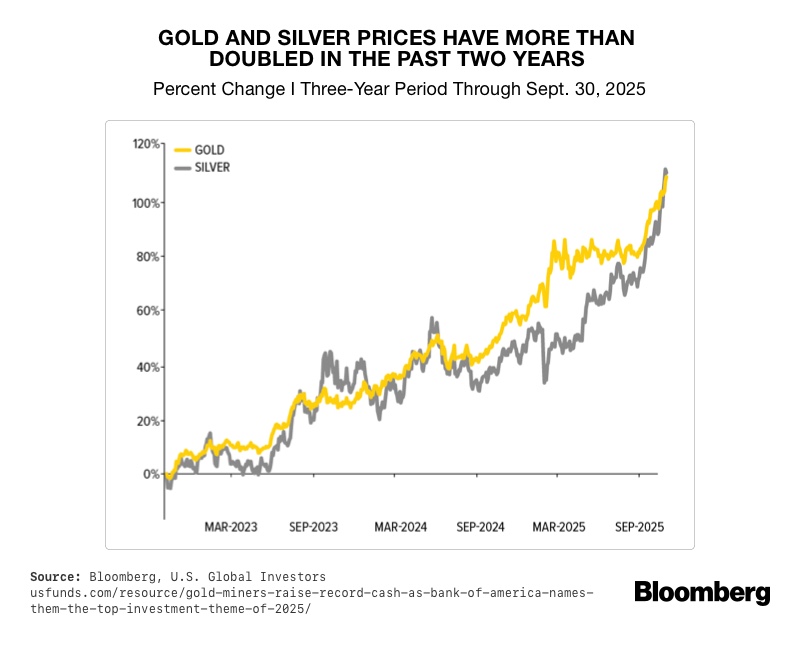
Since 2023, both metals have more than doubled in price, a reflection of deepening global uncertainty. Inflation, rising debt, and weakening confidence in the dollar have pushed investors toward safe haven physical assets. Gold may remain the anchor of wealth protection, but silver is now gaining momentum as a faster moving alternative.

The Numbers Behind the Rally

Silver’s rally in 2025 has been remarkable by any measure. Prices have climbed more than 40 percent this year, with a six-week stretch delivering nearly a 19 percent cumulative gain. The metal has broken through forty dollars an ounce for the first time since 2011 and continues to trade above forty-eight dollars, its highest level in fourteen years. That represents a gain of about 67 percent year to date.1

Gold And Silver Prices

2

Gold has also surged toward four thousand dollars an ounce, rising roughly 50 percent in the same period. Yet silver continues to outpace it, closing the gap between the two metals. The gold-to-silver ratio (how many ounces of silver it takes to buy one ounce of gold) now sits near eighty-one, the lowest in a year and below its five-year average, showing that silver is gaining strength relative to gold.3

Fed Policy, the Dollar, and Market Momentum

Federal Reserve policy has been a major driver. As the Fed moves deeper into its rate-cutting cycle, assets that do not yield interest, such as gold and silver, become increasingly attractive. Historically, silver performs best in the latter half of these cycles. During past rounds of easing in the early 2000s, 2008, and 2020, silver delivered triple-digit gains once rate cuts resumed in earnest.4

The weakening U.S. dollar adds further fuel to the rally. When the dollar falls, commodities priced in dollars rise, and major buyers like China and India gain purchasing power. That creates additional upward pressure on prices just as supply struggles to keep up.

Trade policy has also played a role. The U.S. government’s decision to include silver on a draft list of critical minerals has prompted speculation about tariffs. In response, traders have shifted large amounts of silver into the United States. Roughly 80 percent of London’s silver holdings are now tied up in exchange traded funds, leaving less available for immediate delivery.

Industrial Demand and Structural Strength

Silver occupies a rare position among precious metals because it serves both as a safe haven investment and a vital industrial material. It is indispensable for modern technologies, from solar energy and batteries to electronics and electric vehicles. According to the Silver Institute’s World Silver Survey, the solar sector alone is expected to consume more than 195 million ounces of silver this year, one of the highest totals on record.

This expanding industrial base gives silver a solid foundation of real-world demand. Even as prices rise, the growth of renewable energy and high-tech manufacturing continues to absorb vast quantities of the metal. That broad utility helps explain why silver’s rally has endured and why analysts believe the trend still has room to run.

The Potential for a Silver Squeeze

The combination of strong demand and limited supply has created conditions that many analysts describe as a potential silver squeeze. Investor inflows into silver-backed exchange traded funds have remained strong for months, and inventories have continued to shrink. 2025 marks the fifth straight year that global silver demand has outpaced supply.

The Silver Institute projects one of the largest deficits on record, estimated at more than one hundred million troy ounces this year. With mine output and recycling unable to close the gap, available above-ground inventories have dwindled. High lease rates and rising premiums indicate tightness in the physical market, where users are competing to secure limited metal.

If shortages persist, prices may need to rise sharply to draw new supply into circulation. Historically, these conditions have produced rapid moves upward as traders and investors race to obtain physical metal before prices climb higher. The market’s current trajectory suggests that such a scenario may already be unfolding.

Silver Soars Even Higher

Looking Ahead

Some short-term volatility is inevitable, especially as prices approach the fifty-dollar mark. But the long-term picture remains favorable. Monetary easing, a weaker dollar, strong industrial growth, and tightening supply all point to continued strength. Analysts expect silver to remain in deficit for the foreseeable future, with investment demand providing an additional boost.

Investor psychology is also contributing to the rally. For much of 2023 and early 2025, silver lagged gold’s performance. Now, as gold approaches record highs, many see silver as the more affordable way to gain the benefits of precious metals. The result has been a wave of renewed buying from both institutional and individual investors who view the current price levels as a long-term opportunity.

Conclusion

Silver’s rise reflects a powerful alignment of economic forces: strong investment flows, solid industrial demand, and an increasingly tight supply chain. Together, they have created one of the most dynamic precious metals markets in over a decade. For Americans seeking protection from inflation and uncertainty, silver offers both affordability and strength. To learn more about protecting your retirement funds with physical silver in a Gold IRA, contact us today at 800-462-0071.

Notes
1. https://www.morningstar.com/news/marketwatch/20250925265/silvers-price-has-more-than-doubled-in-4-years-there-may-be-more-room-to-rise
2. https://www.usfunds.com/resource/gold-miners-raise-record-cash-as-bank-of-america-names-them-the-top-investment-theme-of-2025/
3. https://www.kitco.com/opinion/2025-09-26/silver-outshines-gold-historic-six-week-precious-metals-rally
4. https://www.kitco.com/news/article/2025-09-10/silvers-doubly-squeezed-industrial-and-investment-supply-could-drive-prices

Global Debt Reaches Dangerous Heights

Global Debt Reaches Dangerous Heights

Global Debt Reaches Dangerous Heights

World Economy Faces Mounting Risk

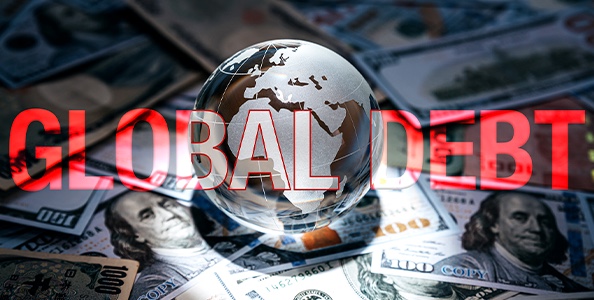
According to a recent report, it’s not just America drowning in debt; it’s the whole world. Total global debt has reached a staggering $337.7 trillion. For context, the World Bank puts global GDP for 2024 at only $111 trillion. Since the pandemic, nations have been living large on borrowed money and borrowed time. Now the global economy is teetering on the edge of collapse. Analysts are asking how much longer the world can keep piling on debt before the system buckles under its own weight.1

And the problem is accelerating. The first half of 2025 alone saw global debt rise over $21 trillion. The global debt-to-output ratio is hovering around 250%.2

It’s even worse for emerging markets. Their total debt climbed by $3.4 trillion in the second quarter to exceed $109 trillion. They now face an unprecedented refinancing challenge. Nearly $3.2 trillion worth of bonds and loans must be repaid or refinanced before the end of 2025. This is coming at a time of tightening and rising borrowing costs. 3

Global Debt in USD Since 2015

4

Government Debt Drives the Increase

The majority of the debt increase is from government borrowing. Owing $58.8 trillion, the U.S. accounts for the largest share of total global non-household debt. Of that, government borrowing makes up $31.8 trillion. The remainder is from financial and non-financial corporations.  China follows the U.S. with $26.1 trillion. Japan ranks third with $11.1 trillion. France and the U.K. complete the top five.  5

The Institute of International Finance (IIF), who produced the report, noted that “the scale of this increase was comparable to the surge seen in H2 2020, when pandemic-related policy responses drove an unprecedented buildup in global debt.” But this debt spike is worrying because there is no global health crisis to justify the borrowing. 6

The IFF said that the U.S. government has fallen into what economists call a “debt trap”. U.S. short-term borrowing now accounts for approximately 20% of total government debt and roughly 80% of Treasury issuance. As a result, the government is increasingly vulnerable to interest rate changes and refinancing risks. 7

The IIF warned that this trend could push politicians to pressure central banks to keep interest rates low. And put the Fed’s independence at risk. If people lose trust in the Fed as an inflation fighter, long-term interest rates can rise, confidence in the currency can drop, and borrowing money can become more expensive.

Bond Markets Under Pressure

The scale of the current debt mountain is undermining global bond markets. They are straining under the weight of massive issuance requirements. In the United States alone, nearly $14 trillion in debt rolled over from G10 countries earlier in 2025. Enormous supply pressures are resulting. Leading voices like Ray Dalio are warning that eventually there simply won’t be enough buyers for our debt. And as a result, rates and inflation will spike.

Already, G7 ten-year yields are near their highest levels since 2011. In the United States, 30-year Treasury yields have exceeded five percent. That level hasn’t been seen since 2007 when Moody’s downgraded the U.S. sovereign credit rating.8

The IIF warned that fiscal strains could intensify as financial markets witness the return of so-called “bond vigilantes”. These investors sell off massive amounts of government bonds when they perceive fiscal mismanagement. Their efforts to enforce fiscal discipline drive borrowing costs way up.

Global Financial System Under Strain

The debt crisis exposes long-standing weaknesses in the global financial architecture. Since the 2008 financial crisis, banks and other financial middlemen have shifted from giving loans mainly to private businesses to buying more government debt. This has created a “sovereign-bank doom loop” risk. A drop in government creditworthiness could hurt the banks. This may force governments to step in to prevent a collapse. That intervention can add even more debt to already stretched public finances.

Conclusion

The global debt crisis of 2025 represents a defining moment for the world economy. Governments and central banks face increasingly limited options. Gold’s meteoric rise reflects investors fleeing risky markets in search of safe havens. The choices made in the coming months will reverberate through the global economy for decades. You can choose to protect the value of your savings today with a Gold IRA. Contact American Hartford Gold at 800-462-0071 to learn more.


Notes
https://serrarigroup.com/world-faces-unprecedented-338-trillion-debt-crisis-as-bond-vigilantes-return-to-test-global-financial-stability
https://www.imf.org/external/datamapper/GDD/2025%20Global%20Debt%20Monitor.pdf
https://www.reuters.com/world/china/global-debt-hits-record-nearly-338-trillion-says-iif-2025-09-25/
https://portfolio-adviser.com/global-debt-levels-are-concerningly-high-an-allocation-to-gold-is-essential/
https://www.visualcapitalist.com/sp/ter01-the-150t-global-debt-market/
https://www.reuters.com/world/china/global-debt-hits-record-nearly-338-trillion-says-iif-2025-09-25/
https://serrarigroup.com/world-faces-unprecedented-338-trillion-debt-crisis-as-bond-vigilantes-return-to-test-global-financial-stability/

Mythical Creatures Griffin 1/4 oz Gold Coin

GoldGriffin

A modern coin design celebrating the legendary Griffin, a creature with the body of a lion and the head and wings of an eagle. Revered in ancient Greek, Persian, and Egyptian art, the Griffin was seen as a fearless guardian of treasures and sacred places. In heraldry, it symbolizes courage, vigilance, and honor, uniting the lion’s strength with the eagle’s sharp vision. The coin’s reverse shows a majestic Griffin overlooking the land, with the inscription “GRIFFIN,” the 2025 year-date, and The Perth Mint’s “P” mintmark.

BREAKING NEWS: Gold Hits Record High on Government Shutdown

  • The Federal government has shutdown, reflecting deep institutional dysfunction.
  • Dangerous national debt highlights ongoing government instability and economic risk.
  • Physical gold offers a secure way to protect your finances.

Government Shutdown Highlights Instability

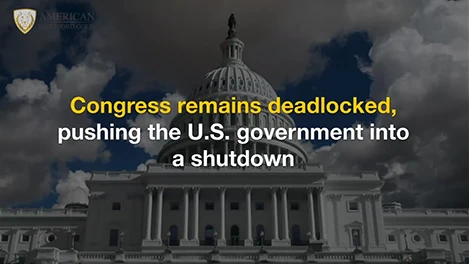
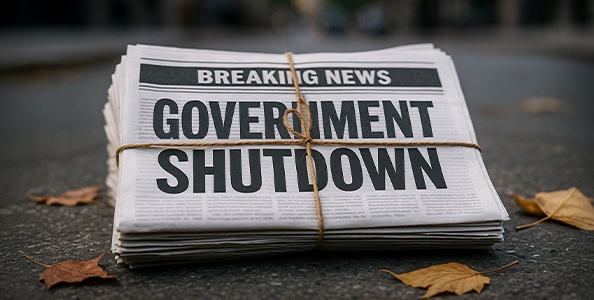
After Congress failed to reach an agreement, the Federal government has shut down. This shutdown is not an isolated incident. Instead, it’s part of a troubling pattern of government dysfunction. Along with escalating national debt and political infighting, it reflects broader institutional instability. In such an environment, a question arises. Where can individuals turn to safeguard their wealth and financial stability? The answer lies in physical gold.

The Dysfunction of Government

The current deadlock in Congress is emblematic of a government struggling to function. Despite having the entire year to pass appropriations bills, none have been enacted. This failure to govern has real-world consequences.

During past shutdowns, approximately 800,000 federal employees were furloughed or worked without pay. The 2018–2019 shutdown alone cost the economy about $11 billion. $3 billion of those losses were permanent. Each week of a shutdown typically reduces U.S. GDP growth by 0.2 percentage points. Even short-term closures create ripple effects. Business investment is slowed. Consumer spending is delayed. And essential federal services such as loan programs and permit approvals are put on hold.2

The federal government’s escalating debt is both a symptom and a consequence of its ongoing dysfunction. The Congressional Budget Office projects that federal debt held by the public will exceed 100 percent of GDP by the end of 2025 and reach a record 107 percent by 2029. This unsustainable trajectory raises questions about the government’s ability to meet its obligations. Federal Reserve Chairman Jerome Powell has warned that the federal debt is on an unsustainable path, and no one really knows how much further we can go.3

The implications of this mounting debt are far-reaching. As the national debt continues its unsustainable path, financial markets and foreign lenders may lose confidence in the federal government’s ability to repay it. This loss of confidence can lead to higher interest rates, reduced demand for U.S. Treasury securities, and a weakening of the U.S. dollar as investors seek safer investments.

Moreover, the government’s increasing reliance on borrowing to finance its obligations has led to a situation where interest payments on the national debt now exceed defense spending, pushing the nation toward a fiscal cliff. If Congress does not act swiftly to confront the structural disconnect between reckless federal spending and incoming revenues, the nation could experience either slow and painful economic decline or a swift and catastrophic sovereign debt crisis.

The Broader Economic Impact

Government shutdowns have far-reaching consequences beyond federal employees. Small businesses dependent on federal contracts or loans experience delays and cancellations. Such delays hurt growth and planning. The travel sector alone can lose up to $1 billion per week as national parks, visa offices, and related services pause operations.4

Confidence in Decline

Government failures are contributing to a drop in consumer confidence. Lower consumer confidence reduces spending and slows business growth. After the 2013 shutdown, nearly half of Americans curtailed spending amid uncertainty. Loss of confidence is pushing an already fragile economy closer to the edge of recession.

University of Michigan’s Index of Consumer Sentiment is 55.4 for September 2025. That’s down from 58.2 in August. And significantly lower than 70.1 from one year ago. Surveys show Americans are increasingly concerned about economic conditions, the labor market, and future financial stability. 5

These disruptions underline a simple truth. The institutions meant to provide stability are themselves unstable.

Gold Responds to Shutdowns

The price of gold surged to record highs following the onset of the U.S. government shutdown. Heightened economic uncertainty, a weakened dollar, and investor demand for safe-haven assets contributed to gold reaching new peaks. Spot prices climbed as high as $3,895 per ounce on the first day of shutdown.

Gold rose by roughly 12% during September, culminating in its all-time high as the government shutdown began. This marks gold’s 39th record high for 2025, as investors increasingly sought protection from political instability. Meanwhile, risk assets like stocks declined during the shutdown. The dollar also weakened noticeably, contributing to gold’s appeal for international buyers.6

Conclusion

This government shutdown is a stark reminder of our political dysfunction. Congressional deadlock and a ballooning national debt threaten economic stability and undermine public confidence. In this climate, protecting financial security becomes paramount. Physical gold offers a secure means of preserving wealth amid uncertainty, especially when held in a Gold IRA. Contact American Hartford Gold today at 800-462-0071 to learn more.

Notes:
1. https://www.statista.com/chart/16850/economic-cost-of-the-government-shutdown-compared-to-requested-border-wall-funding/
2. https://www.reuters.com/legal/government/why-would-us-government-shut-down-2025-09-02/?utm_source=chatgpt.com
3. https://bipartisanpolicy.org/blog/visualizing-cbos-budget-and-economic-outlook-2025/
4. https://www.reuters.com/world/us/us-government-shutdown-could-cost-travel-sector-1-billion-per-week-disrupt-2024-12-20/
5. https://finance.yahoo.com/news/consumer-sentiment-drops-in-september-as-americans-anticipate-job-market-risks-152626218.html
6. https://www.reuters.com/world/india/gold-hits-record-high-us-shutdown-risks-rate-cut-bets-2025-10-01/