SPEAK WITH A SPECIALIST
800-462-0071

I WANT TO

Gold Gains as De-Dollarization Quickens

Gold Gains as De-Dollarization Quickens

  • De-dollarization is accelerating as over 70 countries reduce reliance on the U.S. dollar.
  • The yuan and other currencies are gaining global influence, while dollar supremacy declines.
  • As central banks shift reserves from the dollar to gold, you can secure your financial future with a Gold IRA.

Gold Benefits Amid Dollar Decline

In 2025, de-dollarization is no longer a distant concept but a full-fledged phenomenon. Over 70 countries have now vowed to end their reliance on the U.S. dollar. The movement has evolved into a force to reckon with. A force that is reshaping trade, monetary systems, and even the retirement savings of everyday Americans.

De-dollarization is not a sudden event. It is a reaction to decades of reckless U.S. money printing, weaponization of the currency, and eroding global confidence.

Why Developing Nations Are Turning Away

Countries such as Kenya, Sri Lanka, and Panama have recently pivoted away from the dollar. Their decision is not based solely on politics but on economics. With ‘higher for longer’ U.S. interest rates, the cost of borrowing in dollars has become a heavy burden.

By contrast, debt in currencies such as China’s renminbi and Switzerland’s franc costs far less. This shift is accelerating the decline of dollar dominance.

Geopolitical Tensions Intensify the Push

However, the political dimension cannot be ignored. Many countries are moving away from the dollar because it has been weaponized into a tool of Western control. President Donald Trump recognizes the danger posed by the loss of dollar supremacy. He has threatened BRICS nations with heavy tariffs in response to their de-dollarization efforts.

Meanwhile, China has made no secret of its determination to reduce reliance on the U.S. dollar. In just two years, China has signed numerous deals giving the yuan a central role in cross-border transactions. Their goal is clear. They want to weaken the dollar’s dominance and replace it with the yuan.

Where China Has Made Progress

  • Oil & Energy Payments in Yuan – China now pays Russia and Iran in yuan instead of dollars. The ‘petrodollar’ was once a foundation of dollar dominance.
  • Cross-Border Transactions – The share of China’s trade settled in yuan reached 30% in 2024. That’s up from less than 2% a decade ago.
  • Belt & Road Projects – Building loans to emerging economies are in yuan. Thereby tying them to the currency.
  • SWIFT Alternative – China created the Cross-Border Interbank Payment System (CIPS). It offers a yuan-based substitute for the Western-backed SWIFT bank payments network.1

The Risks for the U.S.

Economists warn that de-dollarization will have serious consequences U.S. influence. They compared the situation to having only one credit card company. Losing access is devastating, but if alternatives exist, the leverage disappears.

As more countries diversify their reserves, the dollar’s role as a financial weapon weakens. There doesn’t need to be an immediate shift to other currencies. The continuing erosion of dollar reserves signals declining global trust.

Gold Gains as De-Dollarization Quickens

2

Gold has outperformed major equity and bond indices in 2025. It is supported by relentless demand and a weakening Dollar Index. The long-standing inverse relationship between gold and the dollar remains intact.

But today’s surge in demand goes beyond hedging currency depreciation. Gold is reemerging as a vital neutral reserve asset. Unlike fiat currencies, it is not tied to any one country or central bank. It has a dual identity as both a commodity and a quasi-currency. Making it uniquely positioned to thrive in a fragmented monetary order.

The dollar’s share of global reserves has slipped below 47%. While gold’s share is climbing toward 20%. Central banks around the world are stockpiling gold at historic rates. Between 2022 and 2024, central banks purchased over 3,100 tons of gold. They drove prices from about $1,800 per ounce in early 2022 to more than $3,500 per ounce in 2025. That’s an increase of approximately 97%. 3

How Countries Are De-Dollarizing

De-dollarization is not occurring in isolation but through coordinated actions:

  • Strengthening Regional Payment Systems – ASEAN nations and others are prioritizing local-currency trade settlements. QR code-based payment systems now allow cross-border transactions in local currencies.
  • Independent Payment Alternatives – BRICS members are working on their own digital currency system. It will potentially backed by gold and other commodities.
  • Oil and Trade Diversification – Middle Eastern countries, including Saudi Arabia and the UAE, are exploring yuan-denominated oil deals and increasing gold holdings.
  • Private Sector Momentum – Companies like Huawei and Gazprom already settle transactions in yuan. JPMorgan estimates that 30% of global trade now bypasses the dollar.4

Gold Gains as De-Dollarization Quickens

The Road Ahead: Slow or Accelerated Decline?

Experts predict that de-dollarization will likely unfold gradually over 10 to 30 years. But acceleration triggers could shorten that timeline to a decade or less.

Baseline scenarios suggest the U.S. dollar will remain important, but with a diminished role. By 2030, the global system may include three to four reserve currencies. It could include the euro, yuan, and possibly a digital basket. Yet debt crisis in the U.S., geopolitical shocks, or black swan events could trigger a faster decline.

Either way, the world is steadily moving toward a multipolar currency system. And gold stands to benefit most.

Conclusion

The decline of the dollar is no longer theoretical. It is happening right now. In this environment, gold is proving itself once again as the ultimate safe haven.

To safeguard your retirement funds, consider opening a Gold IRA backed by physical precious metals. For long-term financial security, contact American Hartford Gold today at 800-462-0071 to learn more.

Notes:
1. https://watcher.guru/news/has-china-succeeded-in-dumping-the-us-dollar
2. https://seekingalpha.com/article/4817916-de-dollarization-is-accelerating
3. https://tradingeconomics.com/commodity/gold
4. https://www.linkedin.com/pulse/why-how-de-dollarization-accelerating-harshad-shah-lftzf/

Gold and Silver Surge to Record Highs

Gold and Silver Surge to Record Highs

Gold and Silver Surge to Record Highs

Precious Metals Continue to Rise

Gold and silver are once again breaking out. While gold traditionally attracts the spotlight, silver is proving it deserves more attention in today’s market environment. Both metals are soaring as Federal Reserve policy shifts, geopolitical tensions, and growing investor demand combine to push prices higher.

Gold and Silver at New Highs

Gold and silver are both surging to levels not seen in years. Over the past three years, both metals have more than doubled in value. This year alone, gold has climbed over 34% on safe-haven demand tied to trade uncertainty and geopolitical tensions. Gold closed the week above $3,440 an ounce. Its highest in more than four months and near April’s record above $3,500.

Meanwhile, silver has gained nearly 40% year to date. It broke past $40 for the first time since 2011. The momentum of the ongoing multiyear bull market in precious metals has been bolstered by expectations of Federal Reserve rate cuts.1

Gold and Silver Surge to Record Highs

2

Rate Cuts and Gold

The latest surge has been fueled by expectations that the Federal Reserve will cut interest rates at its September meeting. Gold prices usually rise when interest rates are cut because lower borrowing costs make non-yielding assets like gold more attractive to investors.

A buy signal in gold was triggered after recent dovish comments from Fed Chair Jerome Powell. Powell indicated that he is now more focused on slowing economic growth and a weakening labor market than on aggressively returning inflation to the 2% target.

This stance was reinforced by the U.S. Department of Commerce inflation report. The Core Personal Consumption Expenditures (PCE) index rose 2.9% in the 12 months through July. That was in line with expectations. Despite persistent inflation, markets are almost fully pricing in a 0.25% rate cut.

Weak labor market data is also expected to support higher gold prices. Bill Adams is Chief Economist for Comerica Bank. He explained that if the August jobs report shows hiring remains soft, it will likely clinch the case for a September rate cut. San Francisco Fed Bank President Mary Daly also reiterated support for easing, given risks to the labor market. Traders now see an 87% chance of a 25-basis-point cut later this month, according to CME FedWatch.3

Technical Breakouts and Other Influences

Saxo Capital Markets noted that key resistance levels of $3,450 for gold and $40 for silver were breached, triggering momentum buying.

Geopolitical uncertainty continues to add bullish momentum. The Russia-Ukraine conflict shows no signs of resolution. Germany and France are now pushing for secondary sanctions on nations supporting Russia’s invasion. That includes China and India.

Tariff uncertainty is also in play. Silver was recently added to Washington’s list of critical minerals, alongside palladium. An appeals court upheld a ruling that found a significant portion of Trump’s tariffs illegal. While tariffs remain in place until mid-October, the uncertainty has weighed on the U.S. dollar and boosted gold.

President Trump’s ongoing conflict with the Federal Reserve is another factor. He is trying to exert more control over the policy committee. Some analysts say that is weakening confidence in the U.S. dollar as the world’s reserve currency.  In turn, further supporting demand for gold.

Investment Demand for Gold and Silver

Institutional and sovereign investors are also supporting the rally. A sign of growing institutional gold demand was seen with Harvard’s multi-billion-dollar endowment fund. They established a sizable position in SPDR Gold Shares (GLD), the world’s largest gold-backed ETF.

Silver is also seeing renewed institutional interest. A 13F filing revealed that the Saudi Central Bank invested $30.5 million in iShares Silver Trust (SLV) and nearly $10 million in the Global X Silver Miners ETF (SIL). This demonstrates silver’s appeal as more than just an industrial play. Analysts highlight silver’s relative value to gold. The historical gold/silver ratio average is between 50 and 60. Today, it is hovering above 86. That means there is ample room for growth. 4

Traditionally, silver’s smaller market size has limited institutional participation. Making it more volatile. Instead, retail investors have long been the primary buyers. The are attracted by its affordability compared to gold. The recent entry of a sovereign wealth fund into silver could prove to be a game-changer for the market.

Looking Ahead

December gold futures were last trading at $3,511.50 an ounce. Analysts note that gold is rallying in part because markets are beginning to price in stagflation, sluggish growth paired with persistent inflation.

Chantelle Schieven is Head of Research at Capitalight Research. She stated that the U.S. dollar’s reputation as the world’s reserve currency is being damaged. Because of this, “there is no telling how high gold prices can go.”5

Conclusion

Gold and silver are poised to go higher for a variety of reasons. Central bank policy to geopolitical uncertainty and shifting investor demand are all pushing in the same direction. Now may be the time to consider how adding physical precious metals, especially in a Gold IRA, can protect and potentially increase the value of your retirement savings.

Learn more today by calling American Hartford Gold at 800-462-0071.

Notes:
1. https://finance.yahoo.com/news/gold-silver-jump-september-rate-051752169.html
2. https://finance.yahoo.com/news/gold-silver-jump-september-rate-051752169.html
3. https://www.kitco.com/news/article/2025-08-29/gold-price-ending-august-record-highs-all-eyes-now-3500
4. https://www.kitco.com/news/article/2025-08-29/silver-could-outshine-gold-investment-demand-picks
5. https://www.kitco.com/news/article/2025-08-29/gold-price-ending-august-record-highs-all-eyes-now-3500


AI Boom or Bubble?

AI Boom or Bubble?

  • AI is resembling a bubble, reminding analysts of the dot-com era.
  • Overvalued stocks and weak AI implementation could spark widespread market losses.
  • Protect your finances with physical gold before the bubble bursts.

AI Risks Inflating

Artificial intelligence has sparked investor excitement not seen since the dot-com era. But analysts warn it could be a bubble ready to burst. The market now rests on the shoulders of just seven tech giants, and if they stumble, the fallout could hit the entire economy. And your retirement. Before that happens, Americans should consider protecting themselves with time-tested assets like physical gold and silver.

The Market’s AI Dependence

By any measure, the market is now overly concentrated. Nvidia is the chipmaker powering much of AI’s infrastructure.  It accounts for about 8 percent of the value of the entire S&P 500 index. A larger share of the market than any company has held in the past 35 years. This summer, they crossed a historic threshold and became the first company worth more than $4 trillion. There are nine other U.S. companies valued at over $1 trillion. All but Warren Buffett’s Berkshire Hathaway are tech stocks. 1

Just a Few Stocks Driving Growth

Through July, the information technology sector was led by Nvidia, Microsoft, Broadcom, Palantir Technologies, and Oracle. They accounted for nearly 54 percent of the S&P 500’s total return. (Nvidia alone accounted for 26.2 percent) Another tech-heavy sector containing Meta, Netflix, and Amazon contributed 15.4 percent of returns. That means almost 70 percent of the index’s total return came from just two sectors. If any of these companies fail to deliver, it could knock the legs right out from under the entire market.2

Experts warn valuations are increasingly detached from reality and reaching extreme levels. Palantir was the top performer in the S&P 500 this year. It saw its stock price gain more than 100 percent. Its price-to-earnings ratio of more than 570 is about 20 times the average for the S&P 500. As The Economist noted, “Palantir might be the most overvalued firm of all time.”3

Cracks in the AI Story

After a bombshell MIT report, investor faith in AI was shaken. The recent MIT study claimed that 95 percent of companies see no returns from generative AI. The findings revealed:

  • Despite $30–40 billion in enterprise investment into AI, most organizations got zero return.
  • Half of AI projects ended in failure.
  • While 80 percent of businesses explored AI, only 40 percent used it.
  • Just 20 percent of AI initiatives reached pilot stage, and only 5 percent made it to production.
  • AI would increase U.S. productivity by just 0.5% and GDP by about 1% over the next decade.  A fraction of the optimistic forecasts.

The market reacted harshly to the report. The Nasdaq fell and Nvidia shares dropped 3.5%. Palantir lost $73 billion in market value. In total, the U.S. stock market lost $1 trillion in just four days as tech stocks sold off.4

The AI Bubble

5

The AI frenzy has many observers recalling the dot-com bubble. OpenAI CEO Sam Altman himself compared today’s valuations to the late 1990s, warning that too much money is chasing unproven models. Ray Dalio echoed this caution, saying: “There’s a major new technology that certainly will change the world and be successful. But some people are confusing that with the investments being successful.”6

Apollo Global Management chief economist Torsten Slok said the AI surge could eclipse the internet bubble of the 1990s. He pointed out that the 10 largest companies in the S&P 500 are now more overvalued relative to fundamentals than they were at the height of the dotcom era.

Back in 2000, the top technology stocks accounted for 15% of the S&P 500. Today, the “Magnificent Seven” make up more than a third of the index. Meaning the fallout of a crash would be even worse.

Another worrying parallel is the massive infrastructure spending. In the 1990s, telecom companies overbuilt fiber optic networks that bankrupted businesses when demand fell short. Today, AI companies are pouring hundreds of billions into data centers. Projections show that $3 trillion will be needed by 2028. If AI adoption doesn’t scale as expected much of that money may never yield returns.

AI Boom or Bubble?

What If the Bubble Bursts?

If the AI boom proves to be a bubble, the fallout could outdo the dot-com crash. Global venture capital poured $131.5 billion into AI startups in 2024, much of it at risk if expectations collapse. Companies like Nvidia could see trillions in market value erased. And trillions more in planned infrastructure spending could be scrapped. The result: a market correction that could wipe out trillions across stock portfolios, retirement funds, and corporate investments.7

Conclusion

AI may change the world over time, but history shows that markets can move much faster than reality. When expectations exceed results, bubbles form. And bubbles burst.

That’s why diversification matters. If you’re concerned about how an AI-driven bubble could impact your retirement savings, consider a Gold IRA from American Hartford Gold. With gold and silver, you can help protect your wealth against volatility, downturns, and market concentration risks.

Call us today at 800-462-0071 to learn how to safeguard your portfolio.

Notes:
1. https://www.nytimes.com/2025/08/22/business/stock-market-nvidia-trump.html
2. https://www.nytimes.com/2025/08/22/business/stock-market-nvidia-trump.html
3. https://www.nytimes.com/2025/08/22/business/stock-market-nvidia-trump.html
4. https://www.dailymail.co.uk/news/article-15020589/Fears-AI-bubble-burst-tech-stocks-tumble-study-warned-artificial-intelligence-investments-zero-returns.html
5. https://www.apolloacademy.com/ai-bubble-today-is-bigger-than-the-it-bubble-in-the-1990s/
6. https://fortune.com/2025/08/20/us-tech-stocks-slide-altman-bubble-ai-mit-study/
7. https://hai.stanford.edu/ai-index/2025-ai-index-report/economy

Recession on the Horizon

Recession on the Horizon

Recession on the Horizon

Recession Already Here?

If you have noticed changes for the worse in your local economy, you are not imagining it. Businesses are struggling, hiring is slowing, and more homes are showing “for sale” or foreclosure signs, signaling stress across multiple sectors. Economic experts are seeing the same signals in their data and warn a recession may be approaching. These early signs suggest a broader economic slowdown could be underway, which may put retirement savings at risk if markets and incomes decline.

Moody’s Analytics Signals Recession Risk 

Earlier this month, Moody’s Analytics chief economist Mark Zandi stated that the U.S. is “on the precipice of a recession”. He cited multiple pressures on the economy. Including tariffs, restrictive immigration policy, and Federal Reserve actions that have slowed growth. According to Zandi, these factors have increased economic uncertainty. They’ve also delayed investment and hiring.

“In my view, the tariffs are substantive,” Zandi said. “They’re slowly but still being passed through, and that’ll become vividly clear in the next few months, as the tariffs get fully passed through to consumers.”1

A recession is defined as a significant decline in economic activity spread across the economy, lasting more than a few months. By that definition, the overall U.S. economy is not in a recession yet. However, Zandi warned that several industries, including construction and manufacturing, are already experiencing recession-like conditions. States representing nearly a third of U.S. GDP are either in recession or at high risk. While another third is treading water and the remaining third continue to expand.

 “States experiencing recessions are spread across the country,” Zandi added. He now estimates a 49 percent chance of a downturn in the next 12 months.2

Recession on the Horizon

3

Labor Market and Payroll Data Indicators

Recent labor data provides further evidence of economic vulnerability. Payrolls expanded by just 73,000 last month, well below forecasts. Revisions to May and June data lowered the average gain over the past three months to only 35,000 jobs. Zandi explained that when more than half of the roughly 400 industries in the payroll survey are shedding jobs, the economy is likely in recession. In July, over 53 percent of industries cut jobs. Health care was the only sector with significant additions.4

Barclay’s bank analysis supports Zandi. They used a “tipping points” model based on payroll and unemployment data. It indicates that the pace of growth has slowed to levels that leave the economy highly susceptible to downturns. Barclays says the U.S. economy has entered a “stall state.” (The economy can be in one of four states: rapid expansion, expansion, stall speed, or recession). According to them, the risk of recession within two years has risen around 50 percent.5

Expectations for Rate Cuts

With the economy showing signs of strain, Barclays expects the Fed to pivot to interest rate cuts in September. The bank anticipates 25-basis-point cuts in both September and December. Zandi cautioned, “The actual rate cuts themselves may not have as much of a benefit as one might think, because they’ve already been anticipated and discounted. It’ll help cushion the weakening of the economy, but it won’t stop it.”6

Gold as a Safe-Haven Asset

Analysts at Barclays describe gold as “the best place to hide” in a recession.7 History shows gold’s enduring role as a hedge against recession-driven volatility and uncertainty. During the 2001 dot-com recession, the S&P 500 fell nearly 40 percent while gold prices gained about 12 percent. In the 2008 financial crisis, gold rose almost 6 percent even as the S&P 500 collapsed over 38 percent. More recently, during the 2020 COVID-19 recession, gold surged to an all-time high above $2,000 per ounce. 8

Conclusion

Experts increasingly agree that the U.S. is on the precipice of a recession. Even a small economic shock could trigger a downturn. Recessions can sharply reduce retirement savings by lowering the value of stocks, bonds, and mutual funds. Job losses or reduced income can also slow contributions to retirement accounts. Making it even worse. For those nearing retirement, these combined effects can be particularly damaging because they may not have sufficient time for investments to recover.

While there still is time, you can protect your savings with a Gold IRA. Contact American Hartford Gold today at 800-462-0071 to learn how to safeguard your financial future.

Notes:
1. https://www.businessinsider.com/recession-prediction-us-economy-mark-zandi-tariffs-immigration-trump-policy-2025-8
2. https://fortune.com/2025/08/25/recession-warning-economic-outlook-states-high-risk-stagnating-expanding/
3. https://thedailyadda.com/2025/08/25/economy/nearly-a-third-of-u-s-states-face-recession-risk-warns-moodys-zandi/
4. https://fortune.com/2025/08/25/recession-warning-economic-outlook-states-high-risk-stagnating-expanding/
5. https://www.investing.com/news/economy-news/barclays-us-economy-in-stall-state-50-recession-risk-in-2-years-4209047
6. https://www.businessinsider.com/recession-prediction-us-economy-mark-zandi-tariffs-immigration-trump-policy-2025-8
7. https://www.investing.com/news/stock-market-news/recession-playbook-says-more-pain-ahead-for-minersexcept-in-gold-3980874
8. https://aheadoftheherd.com/gold-vs-cash-in-a-crisis/


States Spark Grassroots Gold Movement

States Spark Grassroots Gold Movement

  • The declining dollar and inflation are fueling the gold-as-currency movement.
  • U.S. states are making legal and tax changes to ease gold and silver use.
  • Physical gold can become more than a savings safeguard; it may act as an inflation-proof currency

Rising Push for Sound Money

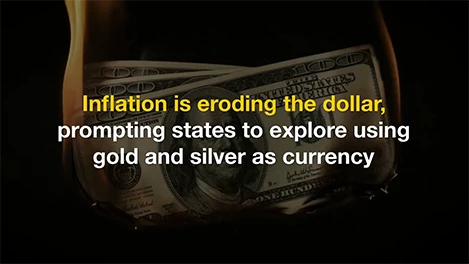
As inflation continues to erode the purchasing power of the dollar, an increasing number of U.S. states are rethinking the role of precious metals. The growing Sound Money, aka “gold as currency,” movement reflects a loss of faith in the dollar and the Federal Reserve. As well as a desire for greater economic freedom.

Advocates see gold and silver as “politically neutral, inflation-free money.” More states are advancing policies to make precious metals easier to own, trade, and even spend. For everyday Americans, these changes could provide more options to safeguard the value of their savings.

State-Level Momentum

The pace of legislative activity is accelerating. While a few such bills were introduced annually in the past, more than 30 were proposed in each of the last three years, including 60 so far in 2025. This year alone, 12 states have enacted legislation, while 32 states are currently debating similar laws.1

Growing Movement To Use Gold

2

Key policy wins include eliminating sales tax and removing capital gains tax on gold and silver purchases. These measures remove barriers that make gold and silver difficult or costly to use. By cutting taxes and enabling electronic payment platforms, states are making it easier for people to hold and spend their gold investments.

The Texas Turning Point

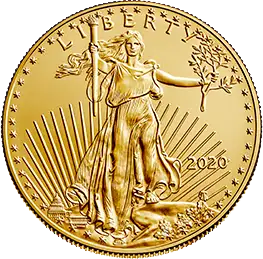
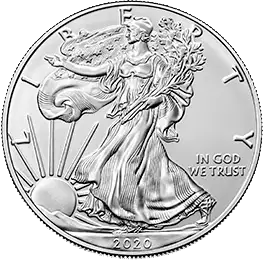
One of the most significant developments came this year in Texas. Lawmakers passed a groundbreaking law making gold and silver usable as legal tender in everyday transactions. Texans will soon be able to buy, sell, and pay for goods and services using precious metals through digital systems.

These systems will be tied to the Texas Bullion Depository. This facility is the first state-administered bullion depository in the U.S. It will provide secure, audited storage for precious metals that can be linked to debit-style cards. Importantly, the law is voluntary. No business is required to accept gold or silver, and residents are free to continue using fiat currency.

Supporters say the law offers a practical alternative. As Kevin Freeman, a legal tender advocate, pointed out, “Exchange-traded funds can’t be used at the grocery store.”3

Tax Relief and Political Pressure

Most states have already removed sales taxes on bullion. Others, such as Maine, Hawaii, Vermont, New Mexico, and Maryland, are considering similar moves. Voters were previously subject to “triple taxation.” In the past, governments taxed buyers when gold was purchased, again when it was sold, and finally through federal capital gains taxes.

In Idaho, the state legislature passed a bill that would have allowed the State Treasurer to allocate some funds into physical gold and silver, though it was ultimately vetoed. Utah went further, passing legislation allowing its State Treasurer to invest up to 10% of the state’s rainy-day fund in gold. That fund is now valued at $180 million. Wyoming soon followed with its own $10 million allocation.4

States Spark Grassroots Gold Movement

Why States Are Acting Now

The motivation is clear. The U.S. dollar has been in steep decline since the start of the year. It is currently trading near multi-year lows. According to the St. Louis Federal Reserve, the dollar’s purchasing power has dropped nearly 27% over the past decade. In the first half of 2025, the U.S. Dollar Index posted its biggest decline since the 1970s.5

Gold prices have surged in response, more than doubling since 2020. Inflows into gold ETFs this year are at levels not seen since 2010. Meanwhile, central banks continue to buy aggressively. UBS Global Wealth Management projects gold prices could reach $3,600 by March 2026 and $3,700 by mid-2026.6

As Jp Cortez of the Sound Money Defense League noted, “States are looking at their balance sheets and saying, ‘We have way too much exposure to dollar-denominated debt… Maybe we need to think about assets that not only have had good returns, like gold and silver, but also carry no counterparty risk.’”7

The Global Context: De-Dollarization

These U.S. state-level moves mirror what is happening globally. Central banks are rapidly increasing their gold holdings to hedge against U.S. sanctions, inflation, and dollar volatility. For three consecutive years, central banks have purchased 1,000 tons of gold annually, with another 1,000 tons projected this year.

Implications for Americans

For everyday Americans, new state laws are making gold and silver more practical than ever. They are removing taxes, boosting liquidity, and opening the door to real-world use. Precious metals can now function like cash in some states. At the same time, offering a stable hedge against inflation in a growing parallel monetary system.

Conclusion

The goal of the sound money movement is not to replace the dollar, but to restore accountability in a system where fiat currencies can be easily debased. By reintroducing gold and silver as legal tender, states are challenging the unchecked power of deficit spending and inflation.

The U.S. dollar’s role as the global reserve currency is not disappearing overnight, but confidence is clearly weakening. A shift is underway. People are losing faith in the dollar and seeking security in precious metals, not only as investments, but as practical, usable money.

You can start protecting the value of your savings today with a Gold IRA. Call American Hartford Gold at 800-462-0071 to learn more.


Notes:
1. https://www.washingtonpost.com/business/2025/07/17/gold-legal-tender/
2. https://www.linkedin.com/posts/karlkrueger_many-states-are-now-working-to-pass-laws-activity-7311051076537839616-b4BV/
3. https://www.washingtonpost.com/business/2025/07/17/gold-legal-tender/
4. https://www.kitco.com/news/article/2025-07-22/tax-reform-gold-reserves-states-lead-charge-sound-money
5. https://www.kitco.com/news/article/2025-07-22/tax-reform-gold-reserves-states-lead-charge-sound-money
6. https://www.barrons.com/articles/gold-currency-money-us-dollar-ab16d0e7
7. https://www.kitco.com/news/article/2025-07-22/tax-reform-gold-reserves-states-lead-charge-sound-money


Why Now Is a Key Moment for Gold and Silver

Why Now Is a Key Moment for Gold and Silver

  • Silver is showing strong upside as younger investors jump in
  • Gold remains a trusted store of value amid dollar weakness and rising debt
  • “Gold is boring until it’s not”—it acts as insurance in times of crisis

Gold and Silver on the Move

Precious metals are once again capturing investor attention. With silver climbing over 30% this year and gold holding its value through market fluctuations, now is a key moment to consider physical precious metals as part of a diversified portfolio.

Silver’s Growing Appeal

Silver’s recent surge is partly driven by its traditional relationship with gold. The gold-to-silver ratio, normally around 65 to 1, is currently near 90 to 1, signaling silver is undervalued. Younger investors, drawn by lower entry costs and higher potential gains, are increasingly allocating to silver. While gold consolidates, silver’s volatility offers opportunities for outsized returns.

Gold vs. Bitcoin

Max Baecker points out that while Bitcoin has a role in modern portfolios, gold is the only asset with no counterparty risk. Physical gold retains value in your hands, unlike digital assets, which depend on electricity, platforms, banks, and buyers. Gold’s long history as a safe haven makes it a cornerstone of wealth preservation.

Macro Drivers of Gold’s Strength

Several larger forces are supporting gold’s outlook:

  • Dollar Weakness: The U.S. dollar has fallen significantly this year, creating tailwinds for gold.
  • Government Debt & Money Printing: Rising national debt and a growing M2 money supply continue to boost the appeal of tangible assets.
  • Potential Market Shocks: Any recession or economic instability could push gold prices even higher, with banks projecting $4,000+ per ounce next year.

Gold Is Boring Until It’s Not

As Max Baecker notes, gold often appears dormant. Then suddenly, it surges. Like an insurance policy, it may not always make headlines, but in times of financial or geopolitical stress, gold comes alive, protecting investors when they need it most.

Conclusion

Gold and silver continue to demonstrate their value as long-term stores of wealth and hedges against uncertainty. With silver’s upside potential and gold’s proven stability, incorporating both into a portfolio is a prudent strategy for Americans seeking to protect and grow their wealth.

Contact American Hartford Gold at 800-462-0071 to explore how physical precious metals can safeguard your financial future.